Everything On This Site
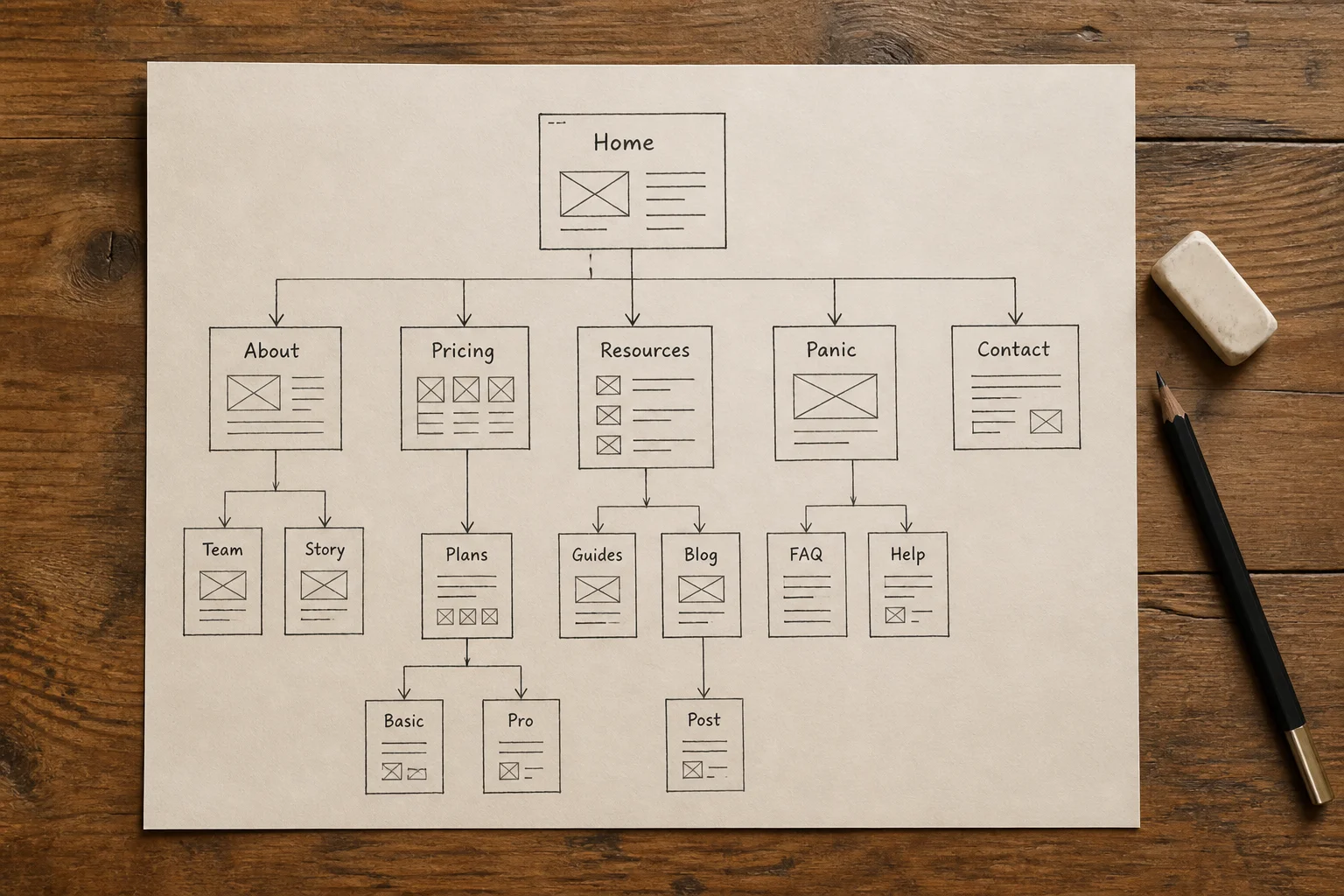
Every page on this site, in one place, grouped by what you are trying to do rather than alphabetically. Each line is that page's own summary. Nothing here is behind a form and nothing requires an email address — that is the whole point of the site, and this is the map of it.
One of six pages on about us. Browse all 69.
Some Highlighted Links
Start here
- Home — Most stalled dissertations are stuck for a reason nobody has named out loud. We name it. Doctoral coaching, holistic diagnosis and advanced editing since 2010.
- What Help Do You Need? — Work out what help you actually need — often none. And the evidence on writing groups and boot camps, which is not what your university tells you.
- How the Doctoral Process Actually Works — The PhD writing process's steps. All of them. In one place. Who decides what, and where the real gates are. Even more useful if your uni has no handbook.
- Is This Normal? — THOSE questions. The quiet ones. The ones that are hard to ask your Chair, sometimes anyone. Nearly all have the same answer. Not the one you are dreading.
- Graduate Degree — Proposals and theses, and dissertations and capstones... oh my! Every stage of serious academic writing, plus resources — ours and other people's.
- Professional Degree Capstones and Theses — MBA, MSOD, MPA, MSW capstones and professional master's theses. A capstone is not a 'small dissertation' — what differs, and what fails the same way.
- Scholarly Terms — All the pesky terms everyone assumes you know. Plain definitions, and in most cases what to actually do about the thing being defined.
Planning and setting up
- Topic — Topic selection is often HARD. A few get lucky. For the rest of us? We discuss what makes topics work, and where to find them.
- Methodology at Proposal Stage — Methodology. The most consequential choice you make before writing. Theoretical or conceptual framework — which? And the trap nobody warns you about.
- The Thesis Proposal — The real beginning, the proposal. Why the framework you choose here can cost you much later. What committees are really assessing when they approve one.
- Outlining — Few do it. Fewer are taught how. Which is why so many stare at a blank page. What an outline is, how to build one, and the question that finds every gap in it.
- Setting Up to Write a Thesis — Sustained concentration = success. Distraction and discomfort are not neutral. How to maximize writing productivity: the environment, the tools, the browser.
- Backing Up My Thesis and Research — Syncing is NOT backing up. Losing a dissertation is not academic humor. Backups are not optional. Step by step, for every major platform. Never lose your work.
- Elevator Pitch — Not just for Silicon Valley. Too long for a lift ride means muddy thinking, by definition — and working on the pitch is how you clear it. A clarity exercise.
Writing it, chapter by chapter
- Thesis Writing Process — Proposal through conclusion, in the order you will write it — with the problems that turn up at each stage named in advance.
- Ch.1: Solid Rock or Crumbling Sand? — Solid rock or crumbling sand. Where you commit — and where an AI, if used, agrees with anything you write. What must be established, and what sinks it.
- Ch.2: Literature Review — The black hole. Formulaic, still the chapter that drifts and swallows candidates whole. How many sources? How long? How to stop rewriting it.
- Ch.3: Methodology — The fiddly bits. The shortest chapter, and the one that SHOULD be easiest — with the right preparation. What bells to ring, and what goes wrong when you hit sour notes.
- Ch.4: Research and Results — Your results. Nothing else. The chapter where showing off costs. What belongs? What does not? When to hire a statistician — and what if the data disagrees.
- Ch.5: Conclusion — Lucidity or collapse. Your results in the context of prior art, future research, and every committee's favorite: do your conclusions follow from your findings?
- The Abstract — Written last, read first, and often the only thing an external reviewer reads through. An 8-sentence recipe, the word-limit trap, and why AI abstracts fail.
- University Abstract Word Limits — Rejected in the abstract? Rejected on an arbitrary institutional word count? Grinding your teeth? Or just need to write one fast and right? Answers here!
- Scholarly Style — Clarity, linearity, scholarly register. Prolixity is often a symptom rather than a style — of thinking not yet finished. What committees actually notice.
- Clarity Always Clarity — Clarity is neither abstract nor vague. It is the visible result of effective thinking. Here are the concrete steps to real clarity, and two tests.
- Fast Thesis Writing — Faster writing is better writing. Apologies to your English teacher. Why? Thinking and continuity survive between sessions. The reasons, and a real action plan.
- What Your Chair's Comments Actually Mean — Tighten your scope. Be more critical. This is descriptive. Fourteen comments decoded — what each actually means, and what to ask your Chair next.
When it goes wrong
- Thesis Approval Trouble — It is almost never ability. We cannot say that strongly enough. Nor is it the reason you tell yourself. Reasons are real, and findable. That is what we do.
- Rejected and Bounced Dissertations — Bounced. The end of one journey and the start of another. The causes are usually worse than you think and more fixable than you fear. What to do first.
- Dread — Dread is not just a mood, it is a signal. Unaddressed? It kills the thinking and the action your dissertation depends on. Four kinds, and the response to each.
- Panic — When answers cannot wait. Live human help 24/7. Panic is an overload response, not a verdict — and relief starts with one call.
- Why Large Platforms Fail in a Crisis — Why the large editing platforms cannot help in a crisis. The economics, the incentives, and what happens to your work when nobody is invested in it.
- Working With Your Chair and Committee — Guesses contraindicated here. Chairs going quiet. The cost of waiting. Getting replies. Strategies that work. And what to do when silence is a real problem.
- The Doctoral Triage & Defense Directory — Public pages listed by the situation: detector accusation, paper trail, predatory package, citation contamination, vague feedback.
- Should I Quit? — A very serious question, and it deserves a serious answer — sometimes, just sometimes? Yes. We will not tell you what to do. We will help you see clearly.
AI, honesty, and being accused
- AI: Use & Abuse — AI is the best operational assistant a candidate can have — and the fastest way to wreck a dissertation. Exactly where the line falls, and how to stay on it.
- Human-in-the-Loop — You asked your AI if the text made sense. It said yes. The hazard? It was built to say yes. What AI is actually good for, and who will tell you the truth.
- The Ghost in the Machine — Real examples and documented cases of specific AI failures working with text. AI does not only hallucinate — it deletes true material, vagues out specific claims, and the prose closes over the gap. Each example dated, from a high-end frontier model, with what happened to the text.
- AI and institutional policy — What institutional AI policy misses; twelve documented failures, detector research, and publisher disclosure (partial, two sections coming 8 September 2026)
- What to hand somebody who asks about AI — Free, ungated material on AI for subject guides and reference desks. What AI tools actually did to real text, what a detector score means, what to tell somebody wrongly accused, and a one-minute test that needs no software. Four printables. No signup, no lead capture, nothing behind a form.
- Navigating AI Detection Paranoia — Wrongly accused of AI use? It is a large crowd, and growing. What the research shows, what the courts have found, and what to do the instant it happens.
- Purging Citation Contamination — AIs dream of electric sheep. Assume NONE of them are real until you have checked each one. How to check fast, and what to do about the ones that are not.
- Academic Honesty — Academic honesty. Two words, many dimensions. Getting help. AI use. Citations. Plagiarism. Defensibility. Your institution's boundaries. All addressed here.
- Predatory Journals — The vultures. Predatory journals and their unforgivable promises. How they work, how to verify one, and why a dissertation — or hiring — committee will notice.
Practical free tools
- What lives permanently in your laptop bag — Power, adapters, and what changes when you are abroad for months. Free printable checklist.
- Is this journal real? — How to check a journal before you cite it — the manual method, and a prompt that speeds it up
Money, time, and choosing help
- Spend Less Money and Time — Slowly = costly. More time, more money, poorer results. Why writing faster is writing better. The fee nobody warns you about, and the cost on the homefront.
- Clear Pricing — Usually your least expensive option, and here is why. Every rate on one page. No contracts, no lock-ins — we think they are unethical in this field.
- Editor, Advanced Editor, or Coach? — You only play this game once. Everyone else, including us, does it daily. Given that, what do you need? Editor, advanced editor, coach, or sherpa — four levels, and why the difference matters.
- Advantages of Editors and Coaches — We give the AI models and prompts away free — basic editing is largely automated now. What remains is everything a machine cannot do.
- Real Help or a Mill? How to Tell — Scams, lies, inflated claims, and sites that quietly just run your work through an AI. Tests for all of them. Apply them to us too!
- Dissertation and Thesis Services — Everything we do. One giant list — for the list lovers, including us. Check whether we offer what you need without asking. Also, thesis versus dissertation.
- Resources — Tools, references, and reading that save time or make the work better. Everything vetted — so our own reputation is on the line.
For supervisors and committee members
- Questions Supervisors Ask — Nobody trained you for this and everyone assumes somebody did. The questions supervisors ask quietly, answered straight. Free, and free to forward.
- A Practical, Day-to-Day Reference for Chairs — "Ask me for anything but time" — Napoleon, addressing his marshals. And every dissertation Chair since. We cannot give you time…but close, and it is free.
- AI Questions for Supervisors — What a detector score actually means, how to raise AI use without accusing anyone, and where the honest answer is that nobody has decided yet.
After the doctorate
- Post-Grad — You are judged on your research and made — or broken — on your writing. Clarity becomes paramount. What changes at this level, and what to do next.
- Grant Editing & Writing — Structural critique and developmental review for faculty applicants. We have edited applications at up to ten million Euros. One small-to-medium review, free — you remain the author.
About us, and how to check us
- About Us — Coaching since 2006, doctoral work since 2010. No institutional contracts, no affiliations, ever. We work only for you — and you can check every word of that.
- Our Publication Record — Our own publications. Thought you would never ask! Our founder's record: real, attributable, and nearly all of it readable in full for nothing.
- References, Not Testimonials — No client testimonials. Not now, not ever. Why? Testimonials prove nothing. Instead we offer real past clients you can talk to.
- FAQ — Most FAQ pages are written once and left to die in darkness. This one is dated so you can see when it was last touched. What we do, and what we will not do.
- Contact Us — We don't bite, and we won't try to sell you. Fit matters more than anything in this work. Find out whether we have it with you — 24/7 panic line, or normal hours.
One of six pages on about us. Browse all 69.

