Real Help or a Mill? How to Tell
...how do I know this isn't just another scam?...
You are right to ask. This market contains genuine expertise and outright fraud, and from a search results page they look almost identical. Here is how to tell them apart — applied to us as readily as to anyone else.
Back to Advantages of Editors and Coaches
One of seven pages on money, time and choosing help. Browse all 69.
Related links
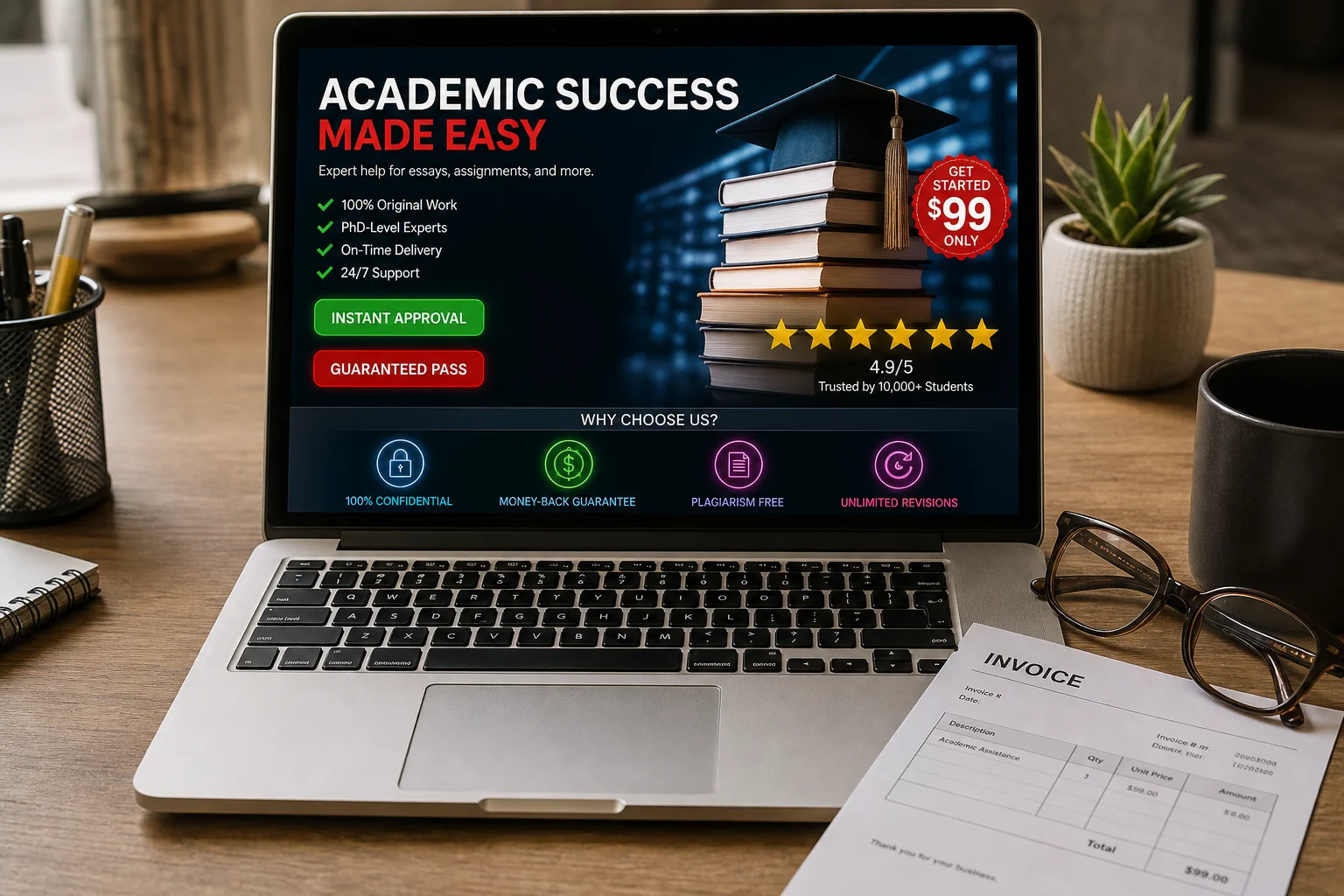
Getting scammed hurts. Sadly, scammers' special prey is people who have a big problem. That is the hard truth. The answer is to check everything. This page is a start — but do not hesitate to check this page's answers too.
On this page
- Is there any dissertation help that is not a scam?
- How do I tell a legitimate editor from a paper mill?
- ...why is this so hard to work out?
- 1. Can they show you their own written work?
- 2. Do they tell you what you do not need?
- 3. Do they state the scope of a claim, or round it into a slogan?
- 4. Will they name their own limits?
- 5. Does a human answer the phone?
- 6. Do they insist they are human?
- 7. Is there a named person who is accountable?
- 8. Do they offer to write it for you?
- 9. Do they want a contract before they understand your problem?
- 10. Can you find out what things cost?
- 11. Whose side are they on?
- 12. Do they talk about thinking, or only about polish?
- 13. Can they give you a reference, or only testimonials?
- 14. Are they listed anywhere a university put them?
- 15. Can you check their reviews — and do you know what the rules are?
- 16. What do you do that a good AI model cannot?
- So is there a legitimate one?
- ...and what if the honest answer is that you should not hire anyone?
...why is this so hard to work out?
Because the incentives are backwards. A doctoral candidate looking for help is usually stressed, often isolated, frequently on a deadline, and rarely has any way to evaluate expertise in a field where the whole point is that everyone else has done this before and you have not. That is close to a perfect market for deception.
So the sector fills with three kinds of operation, and they are genuinely difficult to distinguish from the outside.
Ghostwriting mills will write your dissertation for you. Some say so openly; most use language like "model answers" or "sample chapters" that means the same thing. They are selling academic misconduct, and if you are caught, the consequence lands on you and not on them.
Content-farm services are not fraudulent so much as empty. Fast turnaround, low rates, anonymous subcontractors, a polished site with nothing specific on it. You will get something back. Whether it improves your dissertation is another question.
Genuine practitioners exist, and there are more of them than the search results suggest. Some are excellent and nearly invisible online, because doing good work and marketing well are different skills. That is worth remembering — a firm you cannot easily find is not necessarily a bad one, though it does mean finding it is your problem.
...what actually separates them?
Is there any dissertation help that is not a scam?
The sixteen tests below are how you find out — including when you aim them at us.
The mills sell words. What we sell is thinking about a specific reader, and text built to deliver what that reader needs.
How do I tell a legitimate editor from a paper mill?
A mill sells a finished document and disappears. A legitimate editor or coach leaves a trail you can verify before you pay.
1. Can they show you their own written work?
Ask to see something they have written — published research, an article, anything under their own name that you can check. Most cannot produce it. This is the single fastest filter, and the reason it works is structural: writing at a serious level and coaching full-time are largely incompatible careers, so almost nobody in this market has a current record. Ours is our founder's publication record, including who wrote what and when, so you can verify rather than trust.
Is the editor or coach listed on the sites of reputable universities? This is not a guarantee — but absolute scammers are like rats and cockroaches. They exist in the shadows.
2. Do they tell you what you do not need?
An operation optimizing for invoice size never says "you do not need that." We will tell you plainly that basic editing — grammar, punctuation, formatting — can now largely be done by a good AI model, that we will recommend the model and supply the prompts, and that the human review afterwards is a small expense. That is money we are actively declining to charge you. Watch whether anyone else does the same, on anything.
3. Do they state the scope of a claim, or round it into a slogan?
"100% success rate" is a slogan. "Every candidate we have coached through to School Review since 2010 has graduated" is a claim with an edge you can push on — it tells you which candidates are counted, at what stage, from when. The first is designed to impress. The second is designed to survive being checked. Any firm that will not tell you the boundaries of its own numbers is telling you something.
4. Will they name their own limits?
Capacity is finite for anyone doing real work. We can take only a handful of genuine emergency cases at a time — the number is always in the low single digits — because the alternative is burning out the people who do the work. A firm that appears to have unlimited availability for urgent, demanding work is either much larger than it looks or is not doing what it claims.
5. Does a human answer the phone?
Call before you commit to anything. If you reach an answering service, a chatbot, or a form, ask yourself what happens at two in the morning when you actually need someone. Our numbers are on the Panic page, and they reach people, day or night.
6. Do they insist they are human?
Look for "no AI," "one hundred percent human," "real editors, not machines." Almost every editing service now says it, usually more than once.
It is not a lie. It is also not a reason to hire anybody.
What it tells you is that their main product is work a machine now does — and that they are defending it rather than moving past it.
Ask instead: what do you do that a good AI model cannot?
If the answer is "we are human," that is not an answer.
Our business has always been precisely what even the best AI models cannot do.
7. Is there a named person who is accountable?
Brands cannot be accountable; people can. You should be able to find out who runs the operation, what they have done, and how to reach them if something goes wrong. Every client of ours gets the founder's personal number. Not a support address — his number.
8. Do they offer to write it for you?
This is the bright line, and it is not negotiable. Anyone who will write your dissertation, or hints at it with softer language, is offering you academic misconduct with the risk transferred entirely onto you. A legitimate firm refuses, says why, and explains what it will do instead. See our Academic Honesty page for where we draw that line and why.
Two phrases are worth recognizing, because both are common and both mean the same thing.
"100% original content." Original is not the same as yours. This phrasing almost always means they intend to write it.
"Plagiarism-free guarantee." A real editor helps you check your work for plagiarism. Only whoever produced the text can guarantee its originality — which tells you who is producing it. The guarantee is a confession.
What a paper mill actually is
The term gets used loosely. It is worth being precise, because the differences matter when you are deciding who to trust with your work.
A paper mill sells finished academic writing as a product. Essays, chapters, whole dissertations, written to order and delivered as something you submit under your own name. They will take any job at any level.
They are anonymous by intent — not by accident, and not because they are small. Nearly always offshore, nearly always in jurisdictions where you would have no practical recourse of any kind, and nearly always contactable only through a web form or a messaging app. That is a design decision, and it is the first thing worth noticing about them.
They are not editors who go too far. They are a different business built on a different economic model, and understanding that model tells you everything about what you would actually receive.
How the economics work, and what they force
A paper mill charges a fraction of what the work costs to do properly. That price is not a bargain — it is a constraint, and everything follows from it.
- The text goes through the cheapest available AI model, with generic prompting. Nothing else fits the price.
- Whatever human attention it gets comes from whoever will accept the fee — working at speed, because volume is the only way the rate works at all, and frequently unfamiliar with your academic culture, your field, your institution's requirements, or your citation style.
- They are paid once and flat — entirely up front, or with the balance on delivery. The same either way, whether your work passes or fails. They will never find out which.
At best, what that produces is fluent text that is structurally empty — smooth, evenly weighted, and making no point anyone could disagree with. See our Human-in-the-Loop Structural Refinement page for why that happens and how to test for it.
And "at best" is doing real work in that sentence. AI output is only ever as good as the person directing it: the prompts, the judgment about what to keep, and above all the knowledge of what the work is supposed to look like when it is right. Somebody working at volume, at speed, for a few dollars, in a field they have never studied, will not prompt well — and will not recognize a bad answer when it arrives.
There is a simpler version of the same point. If doctoral-level work could reliably be produced at that price, by people with no training in your discipline, working faster than you can read — your degree would not be worth having. The difficulty is the value. That is the whole reason the credential means anything, and it is why the shortcut cannot work.
Why nothing ever corrects them
This is the part that explains everything else.
A paper mill knows you are not a repeat customer. You either finish or you do not, and either way you are gone.
And they know you cannot complain. If the work fails, where would you take it? Not to your institution. Not to a public review. Not to a colleague. Saying anything means saying what you did.
Your silence is guaranteed and they are counting on it. No repeat business to protect, no referrals to lose, no review anyone will read, no recourse of any kind. That is not a firm with weak incentives to do good work. It is a firm with no mechanism by which bad work could ever cost it anything.
The risks you are actually taking
- It will not be good. This is the one people underestimate most, and it is the one that gets them. Fluent prose cannot fix a structural failure.
- You cannot defend it. Asked how you arrived at a conclusion, in a defense or a meeting, you will not be able to answer — because you did not arrive at it.
- The text may not be original. Mill output is frequently recycled between customers or generated from material already in circulation.
- You have handed your unpublished research to strangers, with no confidentiality obligation you could ever enforce.
- It is misconduct, and misconduct discovered after graduation can cost the degree itself. In an era of increasingly thorough background checks, it can also be a millstone around your neck and your career for many years to come.
And it does not expire.
In 2013 Germany's Minister of Education and Research, Annette Schavan, lost her doctorate. The university found she had "systematically and deliberately" presented work throughout her dissertation that was not her own — an "intentional deception through plagiarism."
The dissertation was thirty-three years old. She had written it in 1980, built an entire political career, and risen to run her country's education system. She resigned four days after the ruling.
And you do not have to be guilty for it to cost you
This is the part worth understanding, because it is the part that will actually apply to you.
An accusation is not the same as a finding, and it does not need to be.
Formal reviews take months. They are conducted quietly, and their conclusions are published to a small audience long after the story has moved on. In the meantime the accusation is public, your name is attached to it, and nobody waits.
There have been prominent cases in which a university's own review concluded that a scholar's citation errors were neither intentional nor reckless, and did not amount to research misconduct — and the damage was already done by the time it said so. The correction is a footnote. The accusation was the headline.
Which means your protection is never the appeal. It is the work.
- Every source verified, opened, and real. See Purging Citation Contamination.
- Every quotation marked as a quotation, every close paraphrase attributed, every time — including in the passages you wrote at 2am and never reread.
- A documented trail. Dated drafts, version history, a research log. If your work is ever questioned, that record is what shows how it was built, and it cannot be assembled afterwards.
None of that is difficult. It is simply tedious, and it has to be done at the time.
You are not a cabinet minister, and nobody is going to comb your dissertation for sport. But you do not need to be famous for this to surface. Background screening is now routine at senior level, and it is thorough. Walmart's most senior spokesman resigned in 2014 when a check run during a promotion process found he had never finished the degree his CV claimed — roughly twenty years after the claim was made.
A dissertation is a public document with your name on it, and it stays that way. The risk does not end at graduation. It ends never.
How to recognize one
They are not always obvious, and the good ones do not look cheap.
- A price per page rather than per hour. Editing and coaching are time-based because the work varies. A per-page price is a product price, and the product is text.
- A guaranteed outcome. Approval, a grade, a pass. Nobody honest can promise that, because nobody honest controls it.
- No named person. No editor you can look up, no publication record, no accountable individual.
- Contact only through a form or a messaging app.
- Nothing they refuse to do. An honest service publishes its limits, because those limits are what protect you.
- Confidentiality framed as concealment. "We protect your privacy" protects you. "Nobody will ever find out" is an offer to help you deceive your institution — and it is the clearest tell there is.
9. Do they want a contract before they understand your problem?
We consider it unethical to ask someone to commit before anyone knows what the work involves. A first conversation should be about your situation, at whatever length it takes, and it should be free. If the first substantive thing you are asked for is a signature, that tells you what the relationship is optimized for.
10. Can you find out what things cost?
Pricing gated entirely behind a consultation is usually a sales structure rather than a pricing structure. Some genuine variation is unavoidable — a rescue at three weeks' notice is not the same job as a proposal review — but you should be able to learn roughly what you are getting into without submitting to a pitch. Ours are published in full on our Clear Pricing page.
11. Whose side are they on?
Ask whether they hold contracts with any university. An operation with institutional relationships has interests beyond yours, and you will not be told when those interests diverge. We have never held such an affiliation and never will, which is the only reason we can be relied on to tell you when your Chair is wrong, when a framework has to be renegotiated, or when the honest answer is that a program is not worth finishing.
Then read how they describe confidentiality. This is the sharpest single test on this page.
Both a legitimate service and a paper mill will promise discretion. Listen to what the discretion is for.
"We protect your privacy." Your information is safe. This protects you.
"Nobody will ever know." "Your supervisor will never find out." "100% undetectable." This is not privacy. It is a promise to help you deceive your institution, and it tells you exactly what business they are in.
The words are similar. What they are offering is not.
12. Do they talk about thinking, or only about polish?
Almost every service in this field describes what it will do to your text — proofread, format, restructure, tighten. Very few describe what they will do about your problem.
Basic editing is now largely automated. In our case we recommend the right model and give you the best prompts, at no charge. If a service is still selling editing or polishing as the main event, they are charging you for what a good AI model already does for a few dollars in tokens.
So ask them directly: what is your methodology for diagnosing and remediating real trouble in a dissertation, and who exactly is going to do that work?
If they cannot answer convincingly, you have your answer.
13. Can they give you a reference, or only testimonials?
These are not the same thing, and the difference is the whole point.
A testimonial is a quotation the service selected — and in the case of real scammers, wrote outright — attributed to initials, published on a page the service controls. Every part of that is under their direct control: what is displayed, how it appears, how it was edited, whether the person exists at all. You cannot check any of it, and a claim you cannot check is not evidence.
A reference is a person. You speak to them, you ask what you want, and no one can edit the answers.
So ask for a referral. The response tells you a great deal on its own. A serious service expects the question and can usually give you a name and a number quickly. Sometimes it takes a few days, because somebody has to be asked whether they are willing — still fair. As long as the references come, you can check them, and that is what counts.
A service with no real clients will explain why references are not possible, and the explanation will sound reasonable. It is not reasonable.
Privacy is a legitimate reason not to publish names. It is not a reason not to arrange a call. Any service can offer a reference without publishing anything, because consenting to one conversation is a far smaller ask than consenting to permanent publication. If privacy is given as the reason you cannot speak to anybody at all, that is worth noticing — and not in a positive way.
14. Are they listed anywhere a university put them?
Search the name against university websites. Writing center resource pages, graduate school listings, library research guides, departmental handouts. Add site:edu to the search and see what comes back.
This is not a guarantee and we will not pretend otherwise. A listing means somebody at some institution thought a service worth naming. It does not mean they were right, it does not mean the service is still what it was, and plenty of good people have never been listed anywhere.
But it is a useful negative. Absolute scammers are like rats and cockroaches — they live in the shadows. A service that has operated for years, at scale, and appears nowhere that any institution controls has managed to avoid the one kind of visibility it cannot buy.
And check what the listing actually says. "Students have used" is not "we recommend." A library guide listing eight editing services is a directory, not an endorsement — but a directory is still a place a mill will not appear, because appearing means being findable when it goes wrong.
Run it on us too. We are not widely listed and we will tell you why: we have not asked. Institutional listings usually come from somebody at the institution knowing your work, and we have spent twenty years working for candidates rather than for schools. That is a real limitation of this test, and it cuts against us as much as anyone.
15. Can you check their reviews — and do you know what the rules are?
Reviews on other sites feel independent. Often they are not.
The US Federal Trade Commission's Rule on the Use of Consumer Reviews and Testimonials took effect on 21 October 2024. It prohibits buying or selling fake reviews, paying for positive or negative ones, insiders posting reviews without disclosing the relationship, running a review site that presents itself as independent while being company-controlled, and suppressing unfavorable reviews. Knowing violators face civil penalties.
Read that as a description of what was happening. Rules of that kind are not written about rare practices.
And be clear about what it does. It makes certain conduct illegal. It does not make the reviews in front of you true, and enforcement arrives long after you have chosen. A high average on a service you are considering this week tells you nothing about that service this week.
The test is the same as every other test on this page: can you verify it yourself? For a review, almost never. For a reference, yes — which is why test 13 matters more than test 15.
16. What do you do that a good AI model cannot?
Ask it directly, and listen to the shape of the answer.
The critical question today and tomorrow, and the one an empty operation cannot answer. A service whose actual product is a model with generic prompting has no response here — because the honest answer is nothing, and any other answer will be vague.
What a weak answer sounds like. Quality. Attention to detail. A human touch. Experienced editors. All of it describes how the work feels rather than what the work is, and none of it names anything a good model cannot simulate, to a greater or lesser extent, in minutes. Note greater and lesser.
A real answer? Names specifics, usually structural: reading a whole dissertation and finding the fault that makes chapter four contradict chapter two. Telling you your research questions cannot be answered by your method. Saying the thing your Chair has not said. Deciding what to cut. Judgment about your particular document, which requires having understood it.
Then apply the follow-up, because it is where the answer gets tested. So what do you use AI for? A service that says "nothing" is either lying or wasting your money — basic editing is largely automated now, and paying a person to do it is paying for the wrong thing. A service that cannot say where the line falls between AI and the rest of their work has not thought about it — which tells you a great deal about what is on offer, and about what to expect of their judgment on your dissertation.
Our AI usage? We recommend, free, which models are currently best for the mechanical work, and we give you the best prompts as well — because you should not be paying for that, anywhere. What we provide is what the models cannot. We read your whole section, chapter, or — at need — dissertation for diagnosis: what is actually wrong, where, and in what order it has to be fixed. That produces concrete and actionable recommendations, discussed with you before anything is executed.
So is there a legitimate one?
Fair question. Run the tests on this page against us.
A named principal, with a publication record you can read. Nearly all of the non-book work is findable online, in full text. The books are available, but they are not free.
Rates published, not quoted on request. You can see every rate we charge before you speak to anybody — and where the total depends on how much work your dissertation actually needs, we say that too, rather than implying we can price it sight unseen.
Nearly 70 pages of material, free. No paywall, no freewall. Free in the way human beings mean free — no irritating captcha puzzle, no download to unlock, no course, no trial, and no follow-up sequence if you click something. Use it and never contact us. That is fine.
Three pages written for supervisors, not for you — a practical reference for Chairs, the questions supervisors ask quietly, and what to do about AI. Free to read, free to forward.
And nothing we tell you is hidden from your Chair. Every word of our advice is on this site, in public. Your Chair can read exactly what we tell you — the same pages, not a summary.
As far as we can tell, nobody else in this field does either of those things.
And a stated list of what we will not do, including the things some services sell.
We are not asking you to believe any of that. We are telling you where to check it.
Truth is what we sell, and it is free. What you pay for is somebody applying it to your dissertation.
...and what if the honest answer is that you should not hire anyone?
Sometimes it is. If your draft needs a careful proofread and nothing more, you do not need a coach and you may not need us at all — a good AI model and an afternoon of your own attention will do it.
We will tell you that on the first call, at no charge, and you will have lost nothing but the time it took to ask. Any firm unwilling to reach that conclusion out loud has an interest in you not reaching it either.
Which raises a fair question: how do we make money doing that?
We hope you tell somebody. A candidate we turned away honestly is a candidate who says so — to a colleague, to their Chair, to the next person in their cohort who is struggling. That is where most of our work comes from, and it has been for twenty years.
One of seven pages on money, time and choosing help. Browse all 69.

