Postgraduate Pages
There are two critical elements to post-doctoral and publishable research. First, high quality research that fills a genuine gap in the literature. Second, it has to be reported clearly and professionally. You will be judged by the quality of your research but will be made or broken by your writing. It is no longer enough to be published. Senior journal publication is not enough, the advent of citation rankings means one is judged on your cite count and quality. Clear, linear, logical, jargon-free, concise scholarly writing has now become super-critical. So, this is the page where academic careers can be made – or broken.
One of two pages on after the doctorate. Browse all 69.
Related links
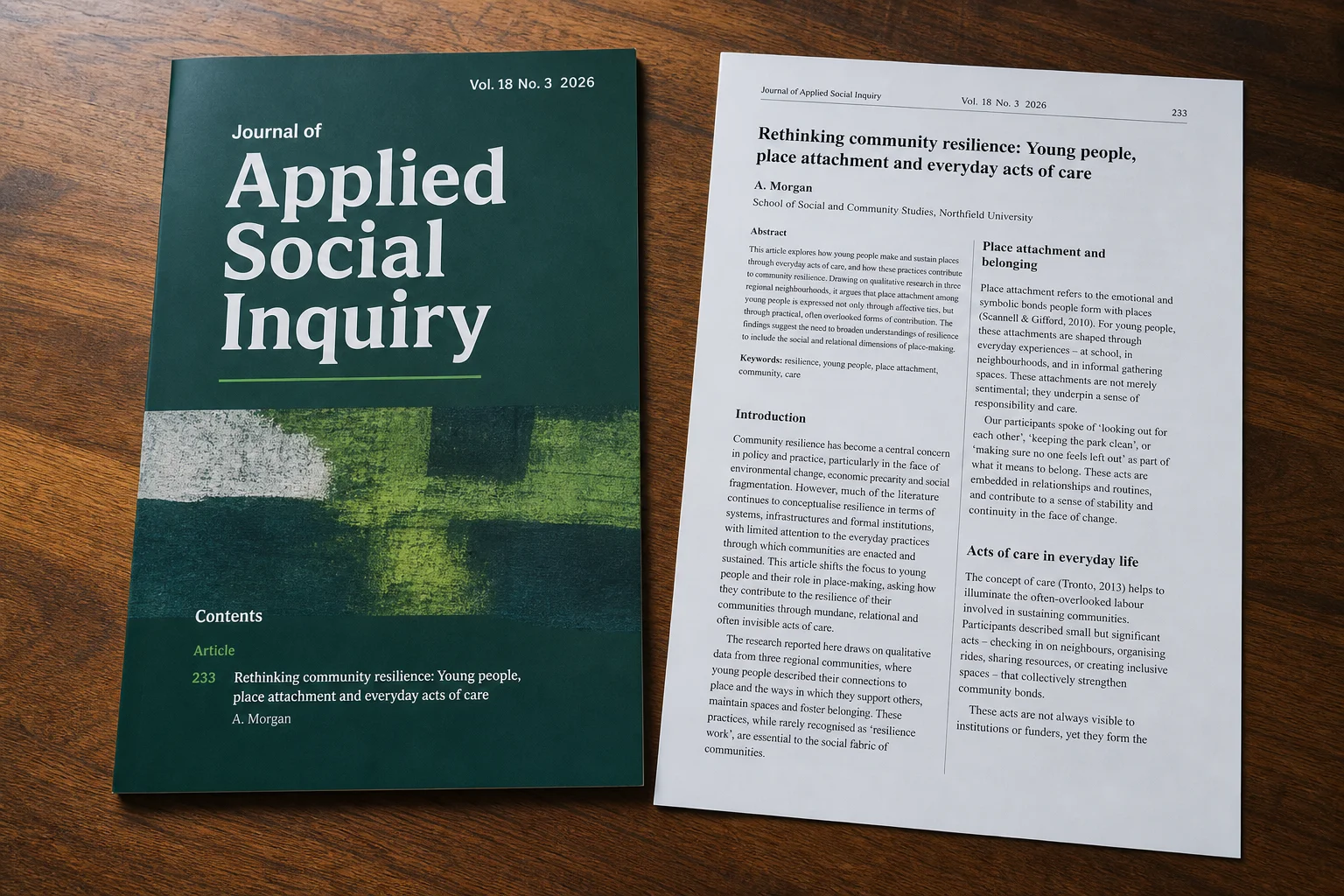
If you are on this page, you are probably one of four people. A post-doctoral candidate. A doctoral candidate who must publish in peer-reviewed journals instead of writing a thesis. A recent graduate wanting to leverage doctoral research. Or a professor or other academic writing for peer-reviewed journals and wanting better results.
Skills required
- Strong critical thinking skills/analytical Skills
- Research skills/Topic Identification
- Holistic grasp of prior research
- Holistic grasp of relationship of prior research to your topic
- Outlining skills
- Statistical skills (if quantitative research)
- Strong grasp of qualitative methodologies (if qualitative research)
- Scholarly Writing skills including ability to write:
- Clearly
- Concisely
- With good grammar and English
- In a scholarly tone
- Logically
- With a strong grasp of narrative
- With perfect citations and Foot/Endnotes
If you are new to writing for academic journals it should come as no surprise that it is quite different than writing for a doctoral committee. If you are looking for help with your first time writing for such journals you will find that many of the skills learned during the doctoral process will be helpful but there is more to learn and some skills may need to be upgraded!
Clarity
Our slogan — and our mantra — for many years has been just one word – 'Clarity.' This is super-critical — and now sourced. A study of 21,486 papers found that citations dropped sharply once jargon exceeded 1% of the abstract — and that none of the most highly cited papers used any jargon at all in the title. Clear, jargon-free scholarly writing matters for the papers that come out of your research.
Martínez & Mammola (2021), Proceedings of the Royal Society B, 288(1948), 20202581. Clarity is of even more importance to your abstract, discussion, and conclusion if you wish to get the highest possible cite counts and best possible cite quality. Thus, to write for senior academic journals you will need relentless clarity in defining the problem being addressed and explaining each step of the process that got you to your research results and conclusions.
What "published" means for your dissertation
A dissertation deposited with ProQuest is published in the copyright and prior-art sense. It has a DOI, it is discoverable, it can be cited — and some journals treat it as prior publication.
It is not published in the sense that builds a career. No peer review, no impact factor, and most dissertations are cited a handful of times or not at all.
Three things follow.
The jargon finding barely applies to the dissertation itself. It applies to the papers that come out of it. Write the dissertation clearly for your committee and your review body, not for citations.
Check journal policy before submitting a chapter as a paper. Some treat a deposited dissertation as prior publication.
And an embargo is available. It exists for exactly this reason, and many candidates do not know it does.
What to do next
Be realistic. We already assume you have or are getting a doctorate, or you are an academic researcher…or a professor looking to improve. Nonetheless, you are likely moving up a level … and it is a big step. So, be realistic about your skill sets and what you bring to the process…yes, even if you are a professor. Great research is helpful, but you also need to write clear, concise, linear, and scholarly English. Skills in data analysis, statistics, methodologies, and logic may also need to be upgraded.
You may need to deal with comments from journals asking for revisions, major or minor. If English is not your first language, you are being asked to write in the most maddeningly illogical and rules-free major language on the planet. Help with editing, style and clarity can make the difference between acceptance and rejection. If they do accept it, it can also make the difference between mediocre and outstanding cite counts and cite quality. Under all circumstances avoid predatory journals!
If a journal you have never heard of invites you, that is a warning rather than an honor. Legitimate journals do not solicit. The invitation is the oldest signal there is, and it has become more convincing since AI started writing the emails.
Check it before you reply — the manual method takes a few minutes, and there is a printable version.
- References, not testimonials
- Wondering why there are no client quotations anywhere on this site? We explain why, and what we provide instead.
- Want to speak with a past or current client about the editing and reviewing support they received? Ask us.
- First Article? Thinking about it? Download a free publishing decision tree guide we have written that outlines the steps required to publish and discusses cost and time commitments.
- Talk to us about what you need. It's free! You may need any of several things. Help with tone and style. More extensive editing, or help with content clarity, data, surveys or statistics. Or a Sherpa — somebody who will help you acquire or upgrade the skills a journal article needs, and make sure things get done on whatever timeline you set. We will also always be there to act as a sounding board for you, as well. We get it and we get how hard the process of writing any journal article is, let alone the first one!
Settle authorship before anybody writes anything.
Disputes are common and they are rarely resolved in favor of the junior author. One doctoral student, removed as first author from a paper she had written, chose not to contest it — her field was small, and the senior author would be writing her references for years.
Agree the order in writing, at the start. It is an awkward conversation once and an impossible one later.
...will the journal reject my paper for AI use?
Possibly, and the ground is moving quickly. Publication is now the sharpest enforcement environment in academia — sharper than the doctoral process, because the consequences reach further and the reviewers have less patience.
What is actually happening
Journals are increasingly requiring AI disclosure statements at submission — declaring whether and how AI tools were used in preparing the manuscript. Requirements vary enormously between venues and change often. Check your target journal's current policy immediately before submitting — not from memory, and not from what a colleague told you last year.
Fabricated references are the flashpoint. A peer-reviewed audit published in The Lancet in 2026 found fabricated citations in indexed biomedical papers had risen more than twelvefold in two years. Major preprint platforms have begun banning authors who submit papers containing hallucinated references, and journals are moving toward desk rejection for undisclosed AI use. See our Purging Citation Contamination page for the verification method.
Reviewers are also screening for automated cadence — prose that reads as machine-generated regardless of whether it is. Peer review is generally a closer, more adversarial read than a doctoral committee's, and a cadence problem that might slip past a skimming committee member is exactly the kind of thing a reviewer looking for a reason to reject is primed to notice. That is a presentation problem with a real cost: rejection on style rather than substance, which is the most avoidable rejection there is.
What this means practically
- Check your target journal's AI policy before every submission, not once a year.
- Verify every citation yourself. Not the formatting — the existence of the paper, the accuracy of the authors, and whether it says what you are citing it for.
- Disclose what you used, where disclosure is required. An accurate disclosure is far less costly than a discovered omission.
- Have the manuscript read by someone who will tell you if it has drifted into automated cadence, before a reviewer does.
The stakes are different at this level. A doctoral candidate who trips an integrity process faces delay. A published researcher who does faces a retraction that stays attached to their name permanently — and damage to a reputation that took years to build.
Many of our clients over the years have bemoaned the fact that they got help too late in the process.
Publish or perish is as true as ever but with the added complication of needing to monitor cite counts and quality.
And it does not ease after the doctorate — it sharpens. A study of researchers across all disciplinary fields and academic ranks found postdocs and assistant professors reporting the highest publication stress of any group, higher than doctoral students, while doctoral students reported the greatest lack of resources to relieve it (Haven, Bouter, Smulders & Tijdink, PLOS ONE, 2019). Nobody warns you that the part after is worse.
Such English also very favorably impacts cite counts.
Disclosure requirements now vary sharply between venues, and several treat undisclosed use as grounds for desk rejection regardless of how minor. Check the specific journal's current policy before every submission.
Also see these relevant pages
- Scholarly Writing
- What lives in your laptop bag
- Writing Environment
- Resources
- Editor or Coach
- Help Assessment tool
- Grant writing/Editing
- Elevator Pitch
Want to know more about us? Jump to our About us page.
- Help Sooner is Better than Help Later. Many of our clients over the years have bemoaned the fact that they got help too late in the process. With published work there are often time pressures. They could be career related or related to research that has already been performed aging as research frequently has a shelf-life.
- Help sooner maximizes the chance that previous research is still current.
- Help sooner can also assist in advancing an academic career. The sooner you are published, or published again, the better. Publish or perish is as true as ever but with the added complication of needing to monitor cite counts and quality.
Publication of research in a quality journal is not beyond reach if you write clean, linear scholarly English. Such English also very favorably impacts cite counts. Indeed, we had one doctoral candidate whose doctoral and post-doctoral publication record was such that his writing was a key reason a senior university hired him. This despite the fact that he could only speak broken English. Why? He had ensured that all his published writing was completely clear, logical and in the best scholarly English. Good writing counts!
If you do not feel that your writing is quite at the top-level of scholarly writing internationally and you want to win at the publication game? You owe it to yourself to contact us!
One of two pages on after the doctorate. Browse all 69.

