AI and institutional policy
AI and institutional policy
...we have to write a policy and nobody here has actually used these tools seriously...
This page is for people drafting policy — program directors, graduate deans, committee chairs, and the librarians they ask. It is written in a different register from the rest of this site.
Back to The Ghost in the Machine
One of nine pages on AI and academic honesty. Browse all 69.
Related links
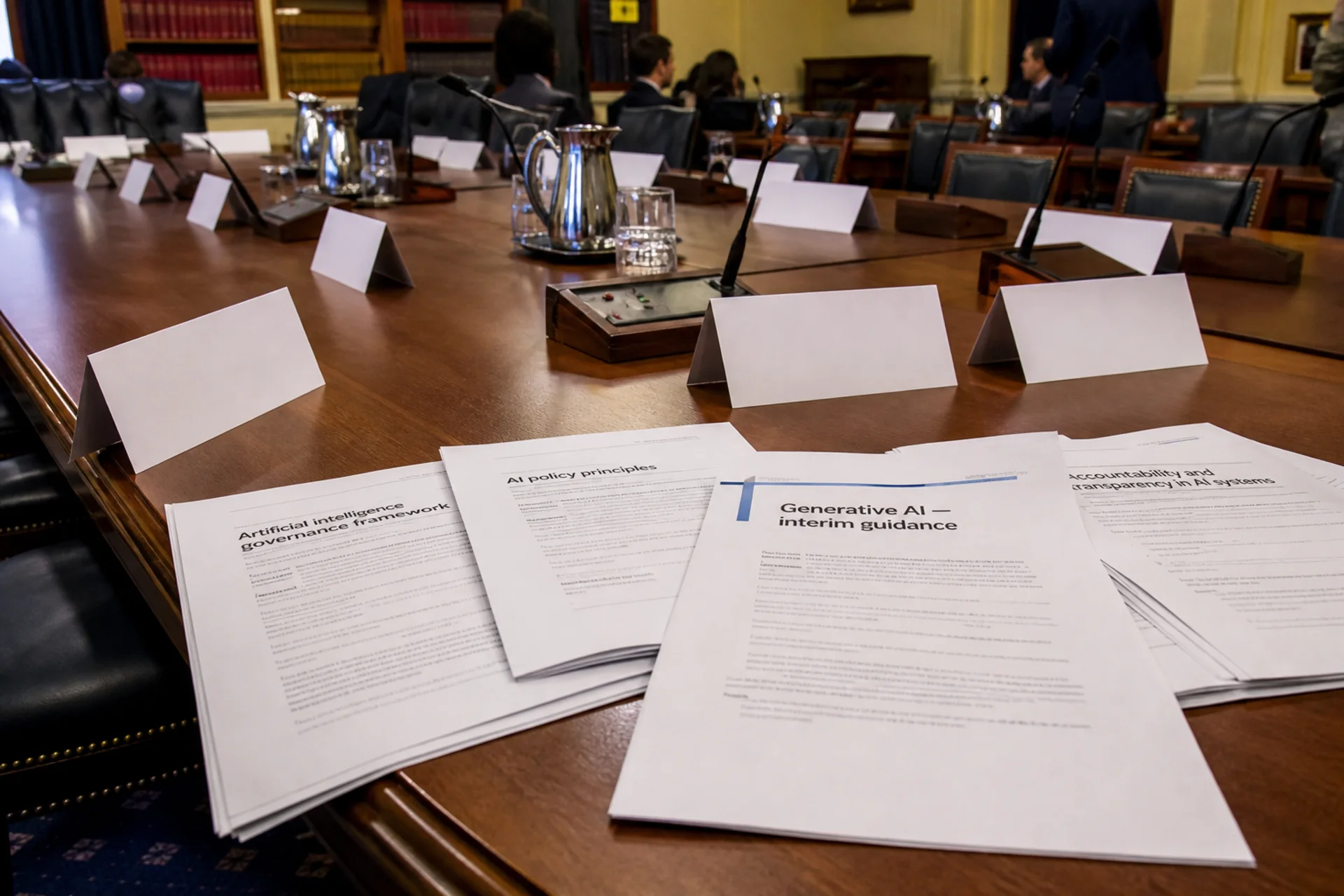
Most AI policy addresses the wrong failure.
Every institutional policy we have read governs fabrication and disclosure — invented citations, undeclared assistance, work that is not the candidate's own. Those are real, and they are visible.
Almost none addresses silent failure: true material deleted and the deletion reported as a correction, a specific claim replaced with a vague one, a model reporting confidently on its own error.
These leave no trace in the output. A policy that requires disclosure catches none of them, because the candidate does not know they happened either.
That gap is why this page exists.
What we can document
Twelve failure modes, from our own work, dated, with the model named and both versions of the text kept.
The Ghost in the Machine — the full list and the cases behind it.
This is a working log, not a survey. We are not claiming these are the only failures, or that they occur at a stated rate. We are claiming they occurred, that we recorded them at the time, and that every one involved a current, paid, frontier-tier system.
What makes them relevant to policy: none of them is detectable by disclosure.
What the research establishes
Detector accuracy. Navigating AI Detection Paranoia carries the peer-reviewed findings, with sources and dates. The short version: accuracy collapses once a student edits their own text, and the false-positive rate is not evenly distributed across writers.
Fabricated citations. Purging Citation Contamination carries the Topaz et al. figures — one in 277 papers indexed in a major medical database contained at least one reference to a study that does not exist, by early 2026, up from one in 2,828 three years earlier.
The trend is the finding. A policy written against the 2023 number understates the problem by a factor of ten.
Journal disclosure policies — coming by 8 September 2026
This section will examine what the major publishers currently require, because a policy drafted against last year's position is already wrong.
We will cover: Elsevier · Springer Nature · Wiley · Taylor & Francis, including Routledge · Sage · PLOS · and a major preprint server.
What we will report for each: what must be disclosed, where, in what form, and what is prohibited outright. With the date we checked it.
Why this section is not here yet: we have not done the reading. We would rather publish it late than publish a summary assembled from what we assume the policies say.
The policies are changing quickly and they do not agree with each other. That is itself the finding a policy committee needs.
Our position — coming by 8 September 2026
We may have one. We may not.
We will decide after the policies are assembled and read, not before.
What we will not do is publish a recommendation that our own research has not yet earned.
Where the rest of it is
The Ghost in the Machine — the twelve documented failures, with cases.
Navigating AI Detection Paranoia — detector accuracy, with sources.
Purging Citation Contamination — fabricated references, and how to check.
Human-in-the-Loop Structural Refinement — where the line sits between assistance and substitution.
Is this journal real? — a checking guide, free and printable.
This page is maintained. The publisher policies section is on a quarterly review because it will not stay true.
One of nine pages on AI and academic honesty. Browse all 69.

