Editor, Advanced Editor, or Coach?
Advanced Editor? Coach? Or... Sherpa?
...and what happened to Editor?
At the end of the day, working with us — or with any other competent source of help — is action to help yourself. Yes, such help is allowed.
Note that you are the only player in the game who has played only once. By definition, you are a rookie. And no team. Alone. That is the nature of the doctoral journey: every other player does this every day, except you. Mostly? They get to play on teams, too.
So even the playing field. Get real assistance that is only in your corner.
One of seven pages on money, time and choosing help. Browse all 69.
Related links
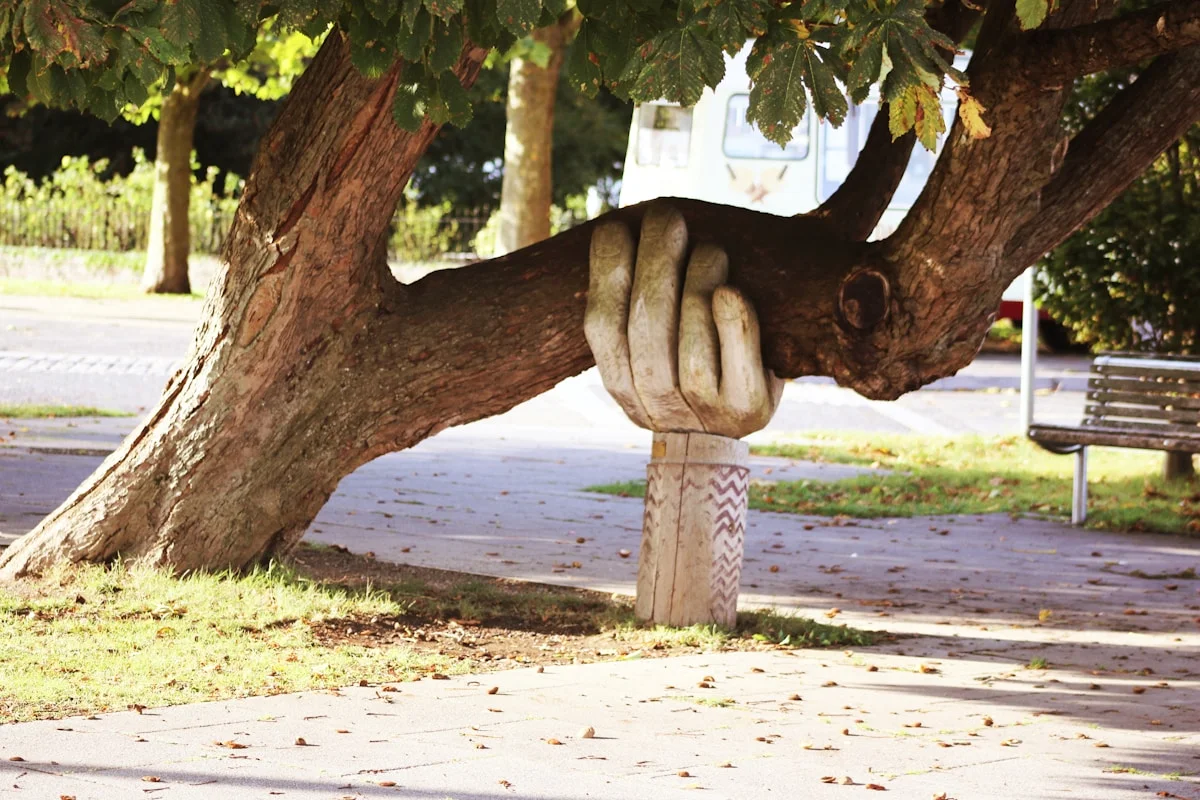
Most candidates think the choice is binary: editor or coach. 'Two out of four ain't bad' — but it is still half the picture.
There are four levels of professional help, and one of them has been body-snatched by the Machines. Editor — the basic kind — is work a good AI model now does well. That leaves advanced editor, coach, and sherpa.
Advanced editing was the middle tier, and it does most of the real work — though not the hardest thinking. Like sherpa, it is a term most candidates have never met. Your school may call it advanced editing or substantive editing.
Then come the two levels where we do our best work: coaching, and acting as doctoral sherpas.
Want answers? Read on.
What should a dissertation coach actually do?
Can I get real help with a dissertation for free?
Yes, and a good deal of it. Nearly 70 pages of this site are free — no paywall, no freewall, no signup — and the basic editing setup is free too: we recommend the model, give you the prompts, and charge only for the final human review. What you cannot get free is somebody who has read the whole thing and can tell you what is wrong with it.
Many candidates arrive believing this is a two-way choice: do I need an editor, or do I need a coach? It is a four-way choice, and two of the four are terms most candidates have never met. What follows is how to tell which you need. If you would rather work through it as a checklist, our help assessment tool asks the diagnostic questions directly.
Basic editing is what most people picture when they hear "editor": grammar, spelling, formatting, sentence-level clarity. Everyone who writes needs some of it — but here is the honest truth: a good AI model can now largely do it. We will recommend the right model and give you the prompts that make it work properly, and we do all of that for free. What we charge for is the final review by an experienced set of eyes. That review matters, and it is inexpensive. What it does not do is touch whether your argument actually holds together.
Advanced editing is a more thorough tier — and it's most of the editing we actually do when we edit.
It looks at holistic consistency across your whole document: does your stated methodology in chapter 3 match what chapter 4 actually reports doing? Does terminology you introduced in chapter 1 stay consistent by the time your reader reaches chapter 5? Does your abstract still accurately describe what your finished dissertation argues? And — just as critical — does your voice stay scholarly and consistent from the first page to the last? This requires holding the entire document in mind at once, not just the paragraph in front of you — which is why it catches problems basic editing structurally can't. In our experience, even advanced AI models still struggle here: they 'misread' — and hence misunderstand — points major and minor, and struggle with "holistic." Their approach is statistical probability, not reasoned truth.
Coaching
Coaching goes a level deeper still. Does this topic actually hold up? Does your methodology fit your research questions? Does your chapter 4 results section actually support what chapter 5 claims to conclude?
This is diagnostic, sequential work, requiring doctoral or post-doctoral reasoning and contextual ability — including, when necessary, the ability to identify and work through fundamentally broken dissertations. Drafts that carry embedded assumptions, contradictions and logical failures cannot become coherent, scholarly, convincing work capable of passing your Chair, your committee, and above all School Review.
It depends on genuinely understanding your specific research — not on a checklist you run once and finish.
The mills sell words. What we sell is thinking about a specific reader, and text built to deliver what that reader needs.
Basic editing, which used to be a significant — and often unanticipated — expense, has now shrunk dramatically in cost. It has not quite vanished, and the final experienced review still matters. But beyond it, advanced editing is needed as much as or more than ever.
Overall, the cost of editing and support has declined, courtesy of AI competently applied. Certainly, advanced editing and coaching are significant expenses. However, they are where the real savings live — of time, money, stress, and opportunity cost. Every term you remain in your graduate program costs a minimum of $5,000 and at many schools much more. If advanced editing or coaching cuts through the fog and saves you even one term, you are likely ahead; if it saves you two or more, and many candidates come to us literally years behind schedule, the savings can be enormous.
Why we do not advertise being human
Look at any dissertation editing service and you will find the same sentence, repeated across every page: no AI — real humans — one hundred percent manual.
Why do they need to say it?
Basic editing — grammar, punctuation, formatting, citation style — is work a good language model now does well, and better every month. We will tell you the current best model to use, and give you the prompts. That is money we are actively declining to charge you.
A service whose main product is that work has a problem. The sentence about being human is how the problem sounds.
We stopped selling it before the machines took it
We stopped selling basic editing in 2020, and in truth we never did much of it. We diagnose. You fix — with us alongside you.
We also had a head start on seeing what was coming. Our founder, among other things, is a computer scientist, and by 2022 there was no longer any doubt about where this was going. Our twenty-year-old name, "morethananeditor," is truer than ever.
We do not advertise being human, because being human is not the point.
Our business has always been precisely about what even the best AI models cannot do. Such a model cannot tell you that an instrument stopped agreeing three chapters ago. It cannot tell you what your Chair actually meant.
And it cannot say "no" to you. It will not — because it is built to agree.
With us you are buying precisely what you need, and what you cannot buy elsewhere or get a machine to do.
The only test of our humanity that has value is that we are not agreeable.
The handover session
We will make sure you understand your own work — because it has to be your work. Not in outline: in detail, well enough to defend any part of it to somebody who is not being generous. Everything we do is done with you, not for you. The handover session is where that distinction becomes concrete.
That is the point of everything we do, and it is why we do the next part.
Whenever substantial work has been done on your dissertation, we insist on a handover session before you take it back. It is not an optional extra, it is not something you can decline to save an hour, and it is included as a matter of course.
What happens in it. We walk you through what was found and why it mattered. Where a section was restructured, we review what was wrong and what the new structure achieves. Where an argument was tightened, we review what it was claiming before and what it claims now. And then we ask you to explain parts of it back to us.
That last part is the whole point. Not a test — a check. If you cannot explain a passage in your own words, you cannot defend it in a defense, and it is very much better to find that out sitting with us than sitting in front of a committee.
Why this matters more now than it used to
For years, nobody asked. A candidate who had substantial help submitted the work and was rarely questioned about how it came to exist. The practice was common, largely invisible, and carried little risk.
That has changed, and quickly. Committees now ask about process in a way they did not three years ago. School Review looks harder. A question that would have seemed impolite in 2022 — walk me through how you arrived at this — is now routine, and it is asked of candidates who have done nothing wrong as readily as of anyone else.
Which means the handover session is no longer a courtesy. It is preparation.
Why we insist
Because the work has to be defensibly yours. That is the line we hold everywhere on this site, and a handover session is how we make sure it is true rather than merely intended.
And because of the question that ends careers, which is always some version of: walk me through how you arrived at this. Somebody who did the thinking can answer it in a sentence. Somebody who received a document and submitted it cannot, and no amount of good writing rescues that moment.
One more reason, and it is ours as much as yours. If a candidate we helped cannot explain their own dissertation, we have failed regardless of how good the document is. We would rather know before you submit than afterwards.
Whoever helped you, do this
This applies even if you never work with us.
If anyone has done substantial work on your dissertation — an editor, a coach, a supervisor who rewrote a section, a colleague who was generous with a chapter — sit down with them and have them walk you through it before you submit.
Ask what they changed and why. Explain parts of it back to them. Find the passages you cannot account for, because those are the ones you will be asked about.
If they will not do that with you, ask yourself why not.
We do not simply take clients on. Here is how the process actually works.
See the Doctoral Triage & Defense Directory for the pages that distinguish ethical coaching from predatory packages.
One of seven pages on money, time and choosing help. Browse all 69.

